Showing posts with label rotten eggs. Show all posts

Thursday, June 16, 2011

The Perks of Having a Chicken Coop

Raising chickens in your own backyard can be a wonderful experience, and even urban dwellers can try this small act of self-sustenance. Imagine eggs in the morning and a fresh chicken on the table for dinner.


If you want eggs to eat, and not to hatch, you should hold off on buying a rooster. You will want to collect the eggs several times a day and refridgerate them immediately. Don't worry about the color of the eggs, they are exactly the same on the inside.

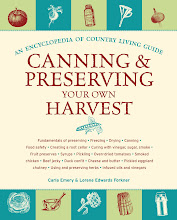
If you come across a nest and are unsure of the freshness, the best way to determine if it is safe to eat is by looking at it. Carla Emery says the egg will be "hard to crack because the membrane inside the shell has become tough. It may smell bad, and if you just start to crack the shell, yucky stuff may come oozing out." Or, try placing it in a pan of water: "Fresh eggs will lay on their sides on the bottom of the pan. If the egg's a few days old, one end will tip upwards. If stale, an egg will stand on end. If plumb rotten, it will float."


Fresh chicken meat is another satisfying and delicious perk of owning chickens, but comes at a price - you will have to kill the chicken. Assuredly, one would want to do this in the most humane way possible, with the least amount of distress for the chicken. Much more information on this matter can be found in the Encyclopedia of Country Living. Here are a two of the simplest ways it can be done:

Buy a killing cone: "You can mail-order a commercially produced killing cone from a poultry supplier or from a local farmsupply store or make your own."

To make a homemade killing cone

* Cut off the bottom of a 1-gal. plastic bottle.

* Cut about 2 inches from the top and handle.

Or, opt to hire out: Lots of communities have backyard chicken butchering entrepreneurs. You bring them live birds in the evening and pick up dressed, bagged, chilled chicken the next morning.

Tuesday, September 8, 2009

Yummy Crepe Recipe and Testing the Freshness of Your Eggs

Fresh or Rotten?  

There really is nothing more unappealing than rotten eggs.  If you have chickens (or try to use the last egg in the carton after the expiration), here is one example of how to test your eggs freshness at home thanks to Carla Emery and the Encyclopedia of Country Living.   

Float Testing

If you want to know about the egg without opening it - which, once you've encountered hydrogen sulfide, is understandable - use the float test. Put the eggs in a pan of water. Fresh eggs will lie on their sides on the bottom of the pan. If an egg's a few days old, one end will tip upwards. If stale, an egg will stand on end. If plumb rotten, it will float. This is all because an egg contains an air cell at the large end of it. Eggshells are perforated through by tiny holes that would be needed by the chick for breathing.  Thus, with time, a part of the liquid content of the egg evaporates, the white and yolk shrink, and the resulting new space is filled by an enlarged air space.

Eggy Crepes Recipe
6 eggs
11⁄2 c. unbleached or whole-wheat flour
1⁄2 c. loosely packed brown sugar or a couple tablespoons honey
1 c. milk

Combine eggs, flour, brown sugar (or honey), and milk. Beat until there's air captured in it for lightness. Pour just enough to make a large, thin pancake onto a greased frying pan or griddle over medium low heat, turning when one side is done. Serve flat or rolled up with butter and honey, fruit sauce, syrup, Devonshire cream, or cream cheese inside.

Egg-stra careful about your health?  Chicken eggs are 10.5 percent fat.  If cholesterol consumption is a worry in your family, feed some or most of the yolks (that's where all the cholesterol is) back to the hens or pigs and shift the recipes to use pure or mostly egg whites. In other words, you could make scrambled eggs for a family using 6 whites and, for example, only 2 yolks.
 
Egg-cooking tip: Eggs should be cooked at a low or moderate temperature because a higher temperature makes the egg tough.