Showing posts with label recipes. Show all posts

Friday, July 27, 2012

Lemonade


Citrus juice always taste best on a hot summer day, especially if it is freshly squeezed. To get the maximum juice from the fruit before squeezing, quickly heat the fruit in hot water for several minutes or roll to soften it.

ORANGEADE
Combine 2 tablespoons of sugar or other sweetener, 1-cup water, and the grated rind of 1 orange in a saucepan. Boil 5 minutes. Cool. Add 2 cups orange juice and 2 cups cold water. Serve chilled over ice.

LEMONADE
For each serving, mix 4 tablespoons lemon juice, 2 tablespoons sugar or other sweetener, and 1 glass ice water. For a batch, juice 5 lemons. Add 5 cups water and sweeten to taste. Serve with a slice of lemon in each glass. 

PINK LEMONADE
Add to a pint of lemonade prepared in the recipe listed above, 1 cup or less of strawberry, red raspberry, currant, or cranberry juice.

LIMEADE
For each glass use 3 tablespoons lime juice, fill with water, and sweeten to taste. Serve with a slice of lime in each glass. 

Wednesday, July 25, 2012

Preserving Herbs


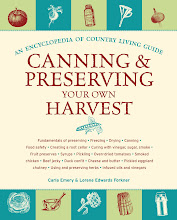
It is very convenient to have potted herb plants in my kitchen window. I love to use fresh herbs in many of the dishes I cook. Some recipes call for dried herbs, so I have used Carla Emery's advice from The Encyclopedia of Country Living to dry herbs for future use. 

HANGING BUNCHES

Cut off the top 6 inches of the plant, or use whole plants, bunch them, tie the bundles with string, and hang them up with the root end upward in a shady, airy place. I plan to hang them from the pot rack over the stove. This will give them ample room to hang without getting in the way of the counter. Allow at least 2 weeks for drying. If you dry your herbs whole like this, crumble them or rub them through a sieve to remove the stems and midribs when you're ready to use them.

STORING DRIED HERBS

To store leaves, seeds, or roots, you can use baby food jars or other empty jars that are airtight to prevent flavor deterioration. The fewer times you open the lid, the better they keep their strength. And try to keep them in a cool, dark, dry place away from heat- not on a shelf over or beside the stove. The cool storage inhibits evaporation of the flavoring oil in the herb, and the darkness protects the color, which fades when exposed to light.

COOKING WITH DRIED HERBS

They are at least 3 times as strong as fresh herbs. Figure 1 teaspoon of dried herbs equals 1 tablespoon of fresh herbs.  

Monday, June 18, 2012

Homemade Vanilla Extract


Recently, I have been interested in making my own ingredients instead of buying processed ingredients at the store. When I came across this recipe for homemade vanilla extract in The Encyclopedia of Country Living I was very excited. Carla Emery lists three different recipes for vanilla extract- two that include alcohol and one that does not include alcohol. I am not sure which one would taste better, especially since you would not be able to taste the alcohol flavor in the final product, however it seems that the non-alcoholic recipe can be used immediately, while the alcoholic versions need to sit between 1-2 months before they can be used.

OLD-TIME VANILLA EXTRACT:

Use 4 oz. vanilla beans, 16 oz. edible alcohol, and 16 oz. water. Slice the beans and cut into fine pieces with a sharp knife. Thoroughly powder them in a mortar with 1-2 oz. granulated sugar. Put the powder into the alcohol and water mixture. If you don't have pure alcohol and are substituting a strong whisky blend or brandy, use correspondingly less water. Let the vanilla soak in the liquid for 4 weeks. Strain. The liquid is your extract.

EASY VANILLA EXTRACT:

 Use 1 quart of any good 80-proof brandy and two split vanilla beans. Soak them in a corked jar for two months before using.

NON-ALCOHOLIC VANILLA EXTRACT:

Cut up one vanilla bean into small pieces, place in a bowl. Pour 1/4 cup of boiling water over them; cover bowl and allow mixture to steep overnight. Blend mixture. Strain and return juice to the blender. Add 1/2 teaspoon of liquid lecithin, 1-tablespoon honey, and 1-tablespoon vegetable oil. Blend; pour into a bottle, cap and refrigerate. Before using, shake well. 

Wednesday, June 13, 2012

No-Fry Doughnuts


Rainy, dreary Seattle days always have me craving a warm breakfast of coffee and doughnuts. I would prefer not to venture out into the horrible weather on these days, so an easy, at-home recipe for doughnuts is the perfect remedy. Carla Emery received a fantastic recipe from a fan for no fry doughnuts. This recipe may be slightly healthier than regular doughnuts because of the lack of frying oil. However, depending on the amount of butter, sugar, and cinnamon you garnish the doughnut with, maybe not. If you do not have a doughnut cutter laying around your kitchen, you can use a large round cookie cutter and a small round cookie cutter to create the doughnut shape and hole in the middle.


NO-FRY DOUGHNUTS

Just as if you were making bread, combine 2 packages of yeast, 1/4 cup warm water, 1/2 cup scalded lukewarm milk, 1/2 cup sugar, 2 eggs, 1 teaspoon salt, 1/3 cup shortening, 1 tablespoon nutmeg, 4.5 cups of flour, and 1.2 teaspoon cinnamon. Knead, cover, and let rise for 50-60 minutes. Turn onto a floured board and roll with a rolling pin until dough is about 1/2 inch thick. Cut with a doughnut cutter and carefully life with a spatula onto a greased cookie sheet. Brush with melted butter. Let rise until doubled in bulk. Bake at 425 degrees for 8 to 10 minutes. Brush with more butter. Dust with cinnamon and sugar. 

Wednesday, June 6, 2012

BBQ Seasonings


Even though the weather may not reflect the season, summer is almost here! The next few months will be jam packed with barbecues and picnics. No barbecue is complete without hamburgers or hot dogs. I am a fan of veggie burgers and veggie dogs layered with delicious homemade condiments.


BARBECUE SAUCE
1. Combine 2 tablespoons of brown sugar, 1/2-cup vinegar, 1/2-cup water, 1-teaspoon salt, 1 small chopped onion, 1/8-teaspoon chili powder, 1/4-teaspoon Tabasco sauce, 1/2-teaspoon mustard, and 1 can of tomato sauce.  
2. Mix well.

DIJON MUSTARD

1. Combine 1 large chopped onion, 3 minced cloves of garlic, and 2-cup dry white wine in a non-aluminum pan.
2. Cook on low heat for 10 minutes.
3. Then let steep for 15 minutes.
4. Strain and discard solids.
5. To your flavored liquid, now add 4 oz. dry mustard, 1/4-cup honey, 1-tablespoon plain-flavored cooking oil, and salt to taste.
6. Simmer again, stirring constantly, while you evaporate it until it's thick enough to spread.

KETCHUP

Combine equal parts of water, strong Japanese soy sauce, and molasses. Add fresh or ground ginger, coriander, and pepper. Mix well.

PEPPER RELISH

1. You'll need 3 quarts of chopped cucumbers, 3 cups of chopped sweet green peppers, 3 cups of chopped sweet red peppers, 1 cup chopped onion, 3/4 of cup canning or pickling salt, 4 cups ice, 8 cups water, 2 cups sugar, 4 teaspoons each of mustard seed, turmeric, whole allspice, and whole cloves, and 6 cups white vinegar (5%).
2. Add cucumbers, peppers, onions, salt, and ice to water.
3. Let stand for 4 hours.
4. Drain.
5. Re-cover vegetables with fresh ice water for another hour.
6. Add spices to sugar and vinegar.
7. Heat to boiling and pour mixture over vegetables.
8. Cover and refrigerate for 24 hours.
9. Heat mixture to boiling and fill hot half-pint or pint jars leaving 1/2-inch headspace.
10. Adjust lids and use conventional boiling-water processing.