Showing posts with label herb butter. Show all posts

Friday, December 11, 2009

Parsley, Sage, Rosemary, & Thyme....

It's more than just a song by Simon & Garfunkel...

"Herbs" are the leaves or other parts of aromatic plants grown in the temperate zone. "Spices" are the stems, leaves, roots, seeds, flowers, buds, or bark of aromatic plants grown in the tropics. Here are some alternative ways to use some if the most common herbs in your garden from the Encyclopedia of Country Living.

Parsley

Parsley is grown for its low-calorie, attractive, edible leaves, which contain lots of vitamins and minerals, including lots of vitamins A and C. Add to meat, stew, soup, salads, vegetables, carrots - anything but fruit - just before you serve it, for parsley shouldn't be cooked. Or use a pretty sprig as an edible garnish beside food on a plate, or as a bouquet in the center of the table. Eating boiled parsley is said to be helpful for a urinary stone and for eye inflammation. It's also said to be a breath sweetener, a natural antidote to garlic and onion breath.

PARSLEY BUTTER

(Good as a clam dip.)

Add the juice of 2 lemons drop by drop to 1 c. softened butter. Keep stirring as you add it - it takes quite a while. Then add 2 T. crumbled dried parsley.

Sage

Chopped fresh sage leaves add flavor to pickles, cheese, and sausage. Dried sage is best in poultry or pork stuffing; if you are using fresh sage, soak it 5 minutes in boiling water, dry, and then chop.

SAGE BREAD

This is good sandwich bread. If your milk is raw, scald it first.

Flour

2 c. milk

1⁄4 c. sugar

2 t. salt

2 t. celery seed

1 t. powdered sage

1⁄4 c. cooking oil

2 eggs

2 T. yeast.

Add ingredients togther. Mix well. Add enough flour to make a kneadable dough. Knead, let rise, punch down, and divide into 2 loaves. Put loaves into greased bread pans, and let rise again until they double in bulk. Bake at 400˚F until loaves sound hollow when rapped.

Rosemary

Called "the herb of remembrance," rosemary has been used both at weddings to symbolize fidelity and at funerals, placed on graves, to signify remembrance. More mundane uses: in perfumes, as a hair rinse (leaves hair scented and shining), in potpourri, as an insect repellent where food and clothing are stored, and, of course, as a fresh or dried seasoning for food (a little goes a long way). Pluck some needles to add to boiling potatoes, summer or winter squash, turnips, broiled lamb chops, pork roast, and rabbit. Add some to spaghetti sauce. Rosemary and cranberry juice combine for a good herb jelly.

ROSEMARY HAIR RINSE

Pour boiling water over the needles, and steep until to your liking and use to rinse your hair.

Thyme

The dried leaves are a seasoning ingredient for many soups and sauces, the herbal equivalent of pepper. You can make tea from the dried leaves or flavor vegetable juice, meats, soups, peas, poultry, clam chowder, and gravies. Use fresh leaves in salads. The only rule is to go easy; it's strong stuff. A pinch will usually do, or else you risk the thyme overwhelming the other flavors. Use flowers or foliage in potpourri. Or combine a strong thyme tea with honey and take for a sore throat, or use with a poultice because thyme contains thymol, an oil of proven antiseptic value. Old-timers also gave thyme as a wormer.

Monday, September 21, 2009

Autumn Herbs & Herbal Compound Butter


Autumn is by far my favorite time of year.  Between the indian summer days of September, to that first rainy sunday, to the rainbow of orange hued trees, autumn is full of color, abundance, and the feeling that you must ring out the last drops of summer.  

All summer, I waited for my rosemary to make it's move.  Then, the other morning it seemingly sprung up over night!  With the alternating rain and sunshine, my rosemary had grown almost
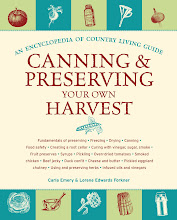
 a foot in one week!  To make the most out of this sudden growth spurt, I turned the Encyclopedia of Country Living and Canning & Preserving Your Own Harvest for ideas.  Here is what I decided to do and the information that helped me:

When to Harvest: Gather herbs on a dry day, early in the morning but after the dew is off. The season to harvest varies with the species. Parsley and chervil are dried in May, June, and July; burnet and tarragon in June, July, and August; marjoram and mint in July; summer savory and lemon thyme at the end of July and August. The tender young leaves that appear before the flowering are usually best. Get leaves before the plants show signs of going to seed. That happens after they blossom, when the blossoms turn into seed clusters and their energy goes into making seed. At best the plant is not at its prime; at worst it gets bitter.

How to Harvest: Cut the herbs with pruning shears or scissors and put them into clean pillowcases or some such. Don't cut to the ground; leave at least a 4-inch stem if you're topping an annual. If it's a perennial, leave at least two-thirds of the plant unharmed. Then take the herbs home and carefully pick them over. Rinse in cool water and drain.


HERBAL COMPOUND BUTTER

A classic element of haute cuisine. Make an assortment of blends and store them in the freezer for a quick finishing touch for grilled meats, pasta, and vegetables.

Season: Summer through fall

Yield: 1/2 pound

Store: Freezer (6 months)

1 cup butter, preferably unsalted

5 tablespoons finely chopped fresh herbs, or herb and edible flower blend, or 2 1/2 teaspoons herb seed, pulverized (I used fresh Rosemary...)

1 teaspoon freshly squeezed lemon juice

Salt and freshly ground pepper

Lemon zest (optional)

Cream the butter in a standing mixer or by hand until very light and fluffy. Add the herbs, lemon juice, salt, pepper, and zest and blend well. Pack the finished butter into a crock or shape into a cylinder and wrap tightly in waxed paper; the roll can be sliced for serving. Store finished butters in the freezer.

The number of possible flavor combinations is limited only by your imagination and access to fresh herbs. Butter is a perfect medium to store herbs and retain their bright garden flavors.


Possible blends and serving suggestions:

Mint and chive-spring lamb, potatoes, peas

Fennel seed and tarragon or chervil-fish, egg dishes

Rose geranium, lavender, and honey-toast, scones

Parsley, chives, and marjoram-all-purpose, good on grilled meats

Dill and mustard seed-snap beans, potatoes, white fish

Garlic, parsley, and oregano-hot bread, pasta, vegetables

Ginger, orange zest, and thyme-pork, chicken, rice, carrots

Thyme, savory, and black pepper-snap beans, chicken